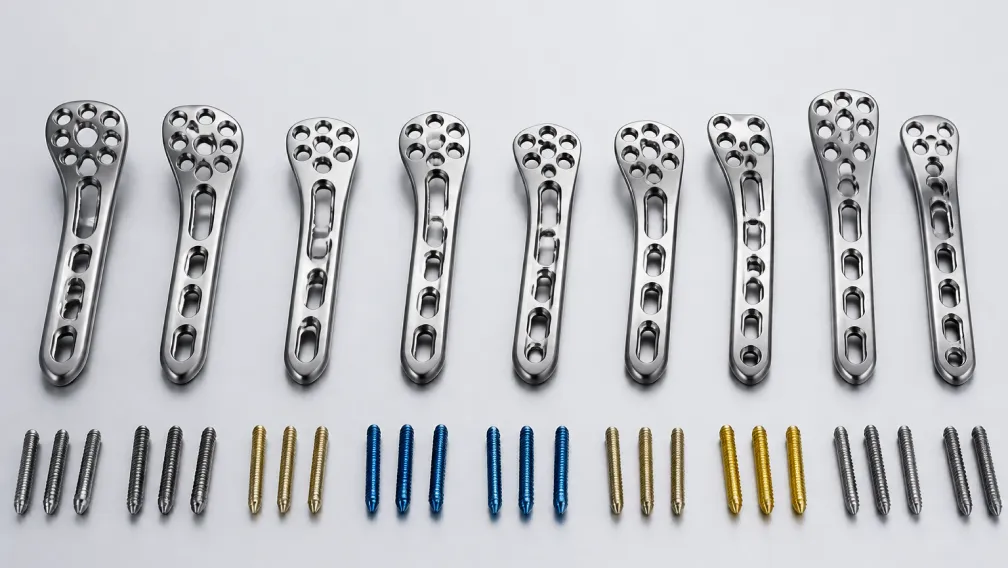
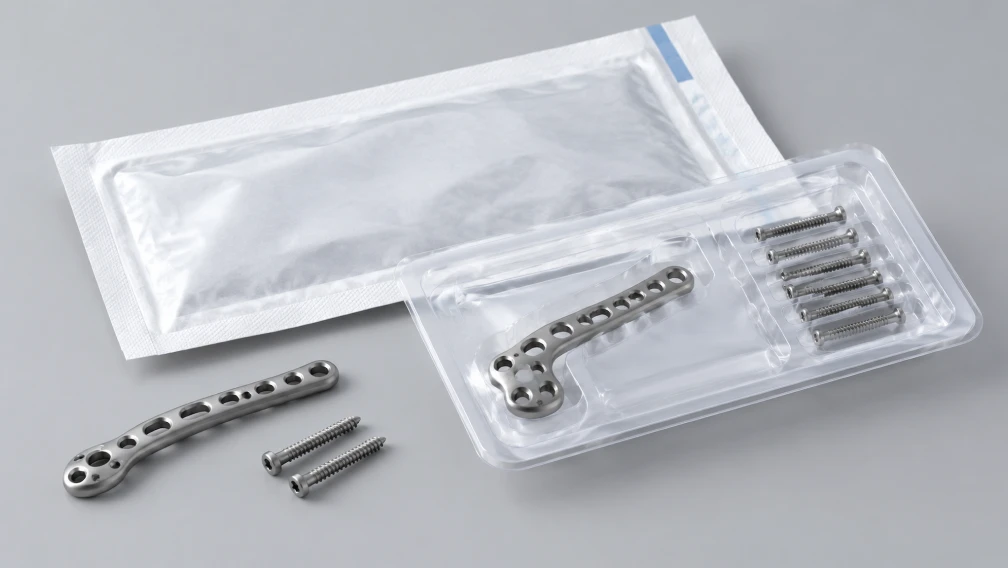
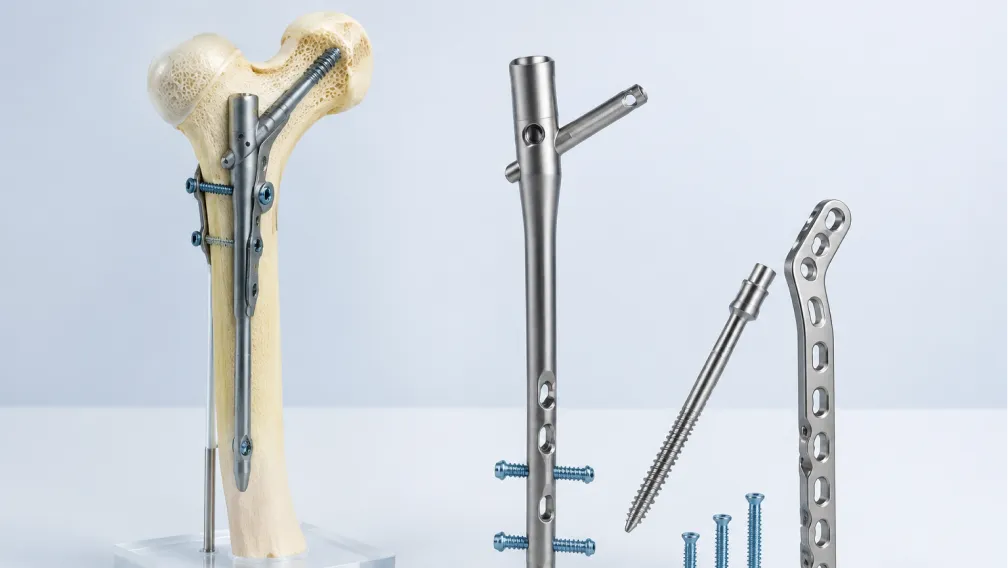
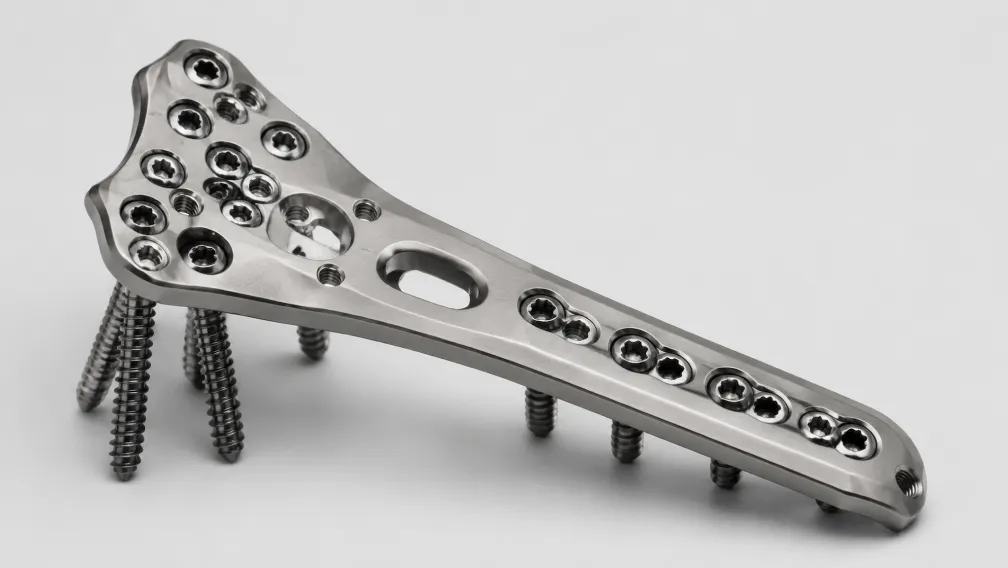
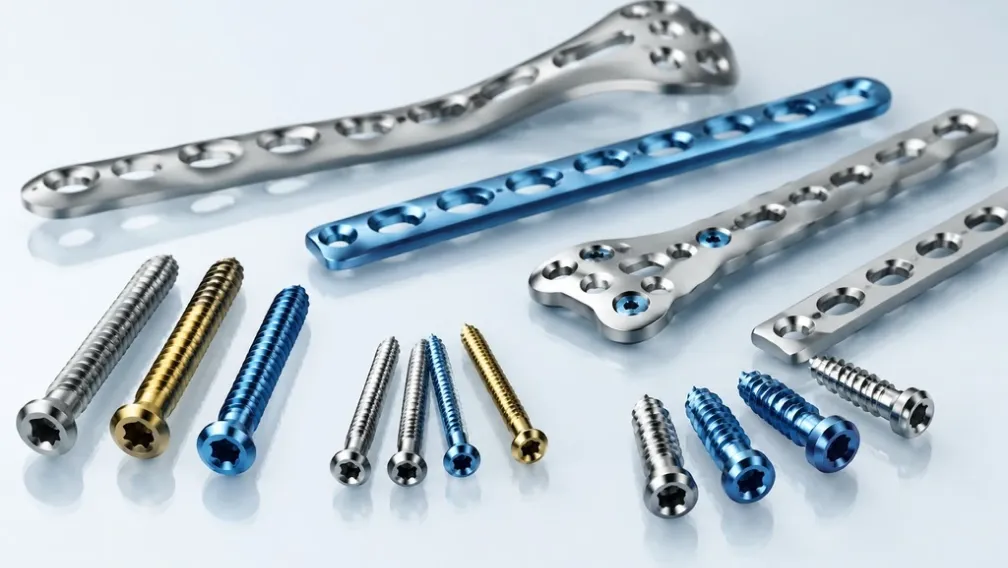
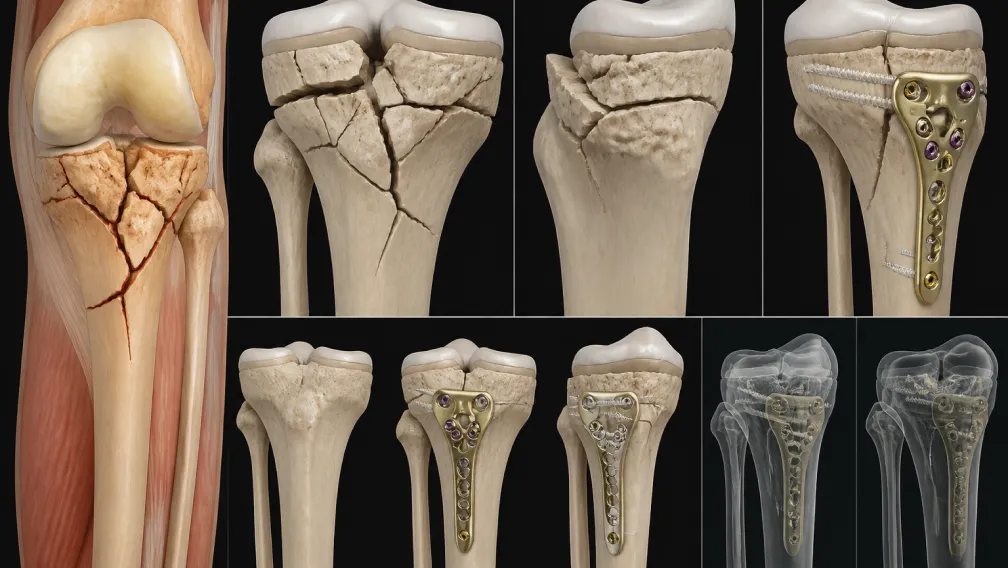
Mordor Intelligence published its updated trauma fixation devices market report on 29 July, sizing the category at $8.45 billion in 2026 and forecasting $11.55 billion by 2031 — a 6.43% compound annual growth rate. Two other 2026 reports, from Research and Markets and Fact.MR, land in the same territory: steady mid-single-digit growth for the plates, screws and nails that stabilize fractures. Market reports are not usually news. This one is worth reading because nearly every line of it describes the product families trauma buyers actually stock.
The numbers that matter
- Market size of $8.45 billion in 2026, up from $7.94 billion in 2025, reaching $11.55 billion by 2031 at 6.43% CAGR (Mordor Intelligence, 29 July 2026).
- Internal fixators — plates, screws and nails — held 63.98% of market share in 2025 and are projected to grow at 8.05% CAGR through 2031.
- Upper extremities commanded 55.12% of the market by surgical site in 2025; lower extremities are the fastest-growing site at 8.62% CAGR.
- Hospitals took 44.86% of end-user revenue in 2025, while ambulatory surgery centers post the fastest growth at 7.71% CAGR.
- North America led geographically with 39.05% share; Asia-Pacific grows fastest at 7.55% CAGR.
A Research and Markets outlook puts the same category at $8.1 billion in 2026 growing at 5.5% CAGR to 2034, and Fact.MR sizes the broader trauma devices space at $14 billion in 2026. Different methodologies, same direction: fracture fixation is a growth market, not a mature afterthought.
Why internal fixation dominates
The report attributes three structural forces to the category's momentum. Bioabsorbable metals and drug-eluting coatings are moving from research into product pipelines, with clearer FDA guidance on bone plate submissions shortening approval timelines. Outpatient fracture care keeps expanding, and value-based reimbursement pushes hospitals toward implants that shorten length of stay and avoid secondary removal surgery — which favors locking and low-profile designs over hardware that patients come back to have taken out. Supply risk in titanium and nitinol shows up as a margin pressure and as an innovation push toward new alloy chemistries at the same time.
The extremity mix is shifting
Two segment details deserve attention from anyone planning a formulary. Upper extremity fixation — hand, wrist, elbow and shoulder work — already accounts for more than half the market, which tracks the procedure volumes behind wrist and hand plating programs. And lower extremities growing at 8.62% annually reflects the aging-population fracture wave: hip, femur and tibia and fibula fixation are the categories where demographic math guarantees volume through the next decade.
What this signals for trauma buyers
Three practical readings. First, the category hospitals spend the most on — internal fixation — is also the fastest-growing device type, so plating and nailing budgets will keep climbing rather than shift to alternative technologies. Second, the ASC migration is real: fracture cases moving to outpatient settings favor suppliers who can deliver complete, compact instrument sets with reliable restocking. Third, Asia-Pacific growing fastest means manufacturing and distribution capacity in that region will keep expanding, which is where export-oriented buyers should look for supply resilience.
The BoneCraft angle
BoneCraft is an independent distributor of genuine orthopedic trauma implants. Plates, screws and nails for internal fixation are our entire business, so a report projecting 8% annual growth in exactly these categories is the demand picture we plan inventory against. We hold stock across all seven anatomic regions covered in our catalog, with factory lot documentation on every shipment. Contact our team for current availability.
Sources
- Mordor Intelligence — Trauma Fixation Devices Market Report 2026–2031, updated 29 July 2026
- Research and Markets — Trauma Fixation Devices Market Outlook 2026–2034
- Fact.MR — Trauma Devices Market Analysis and Forecast to 2036
BoneCraft is an independent distributor of genuine orthopedic trauma implants and is not affiliated with, sponsored by, or endorsed by Mordor Intelligence, Research and Markets, Fact.MR or any manufacturer mentioned.
-

BoneCraft Medical & Technical Editorial Team
Orthopedic Fixation Specialists
The BoneCraft Editorial Team comprises biomedical specialists and medical device supply chain experts. Dedicated to surgical transparency and technical precision, we publish insights on trauma plating, intramedullary fixation, and biomechanical implant performance. Our content synthesizes established surgical techniques, clinical literature, and exact specifications for genuine Zimmer Biomet orthopedic products to support global healthcare distributors and procurement teams.