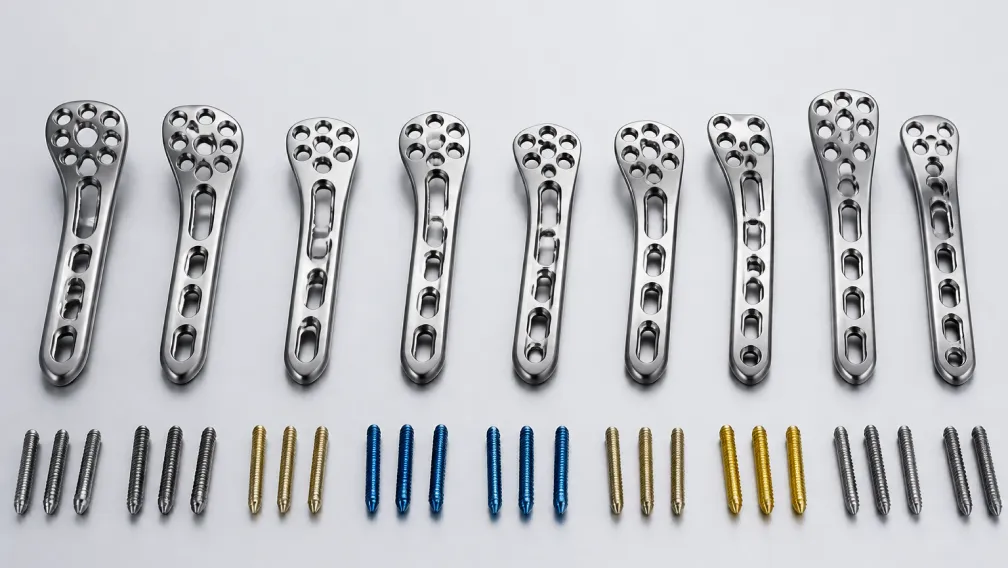
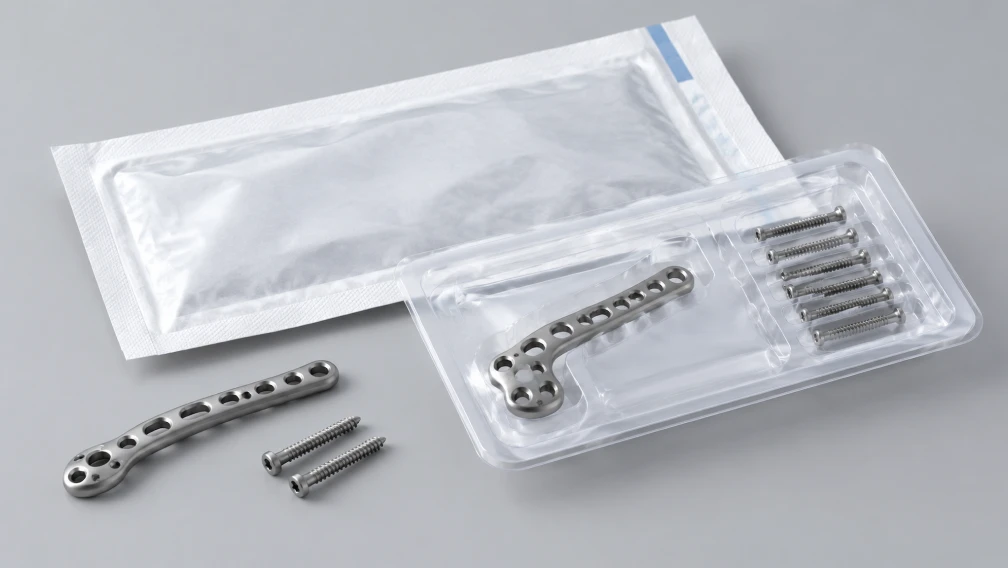
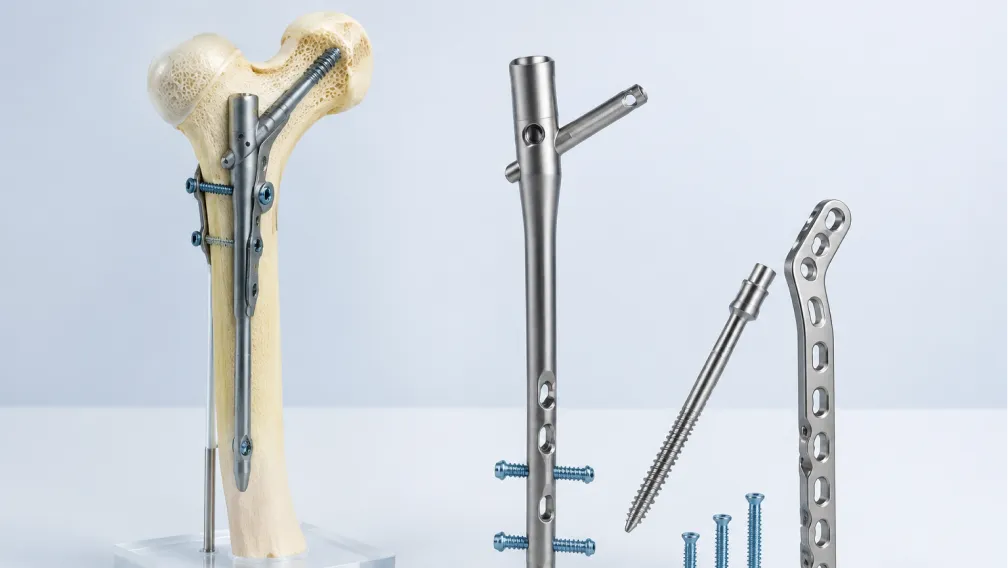
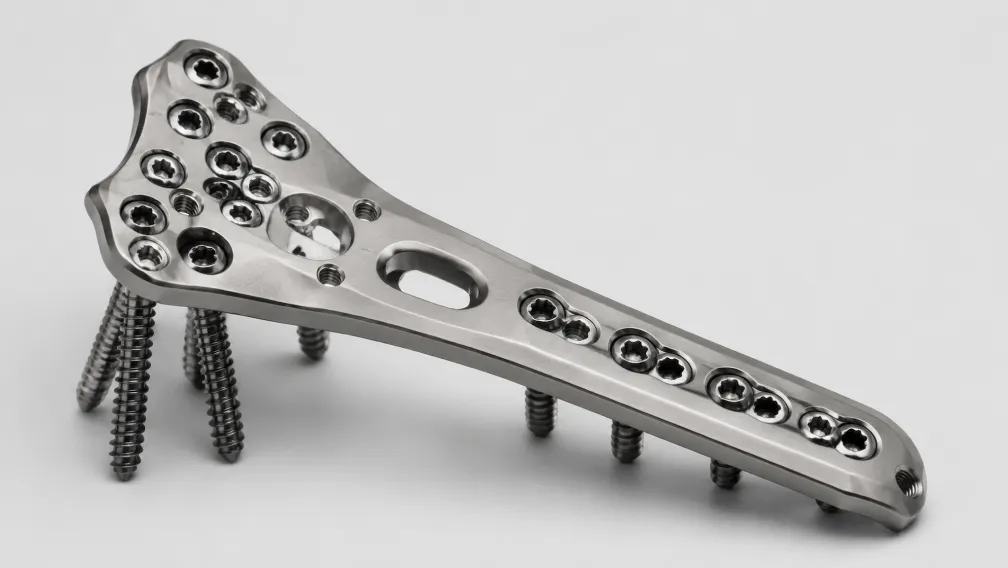
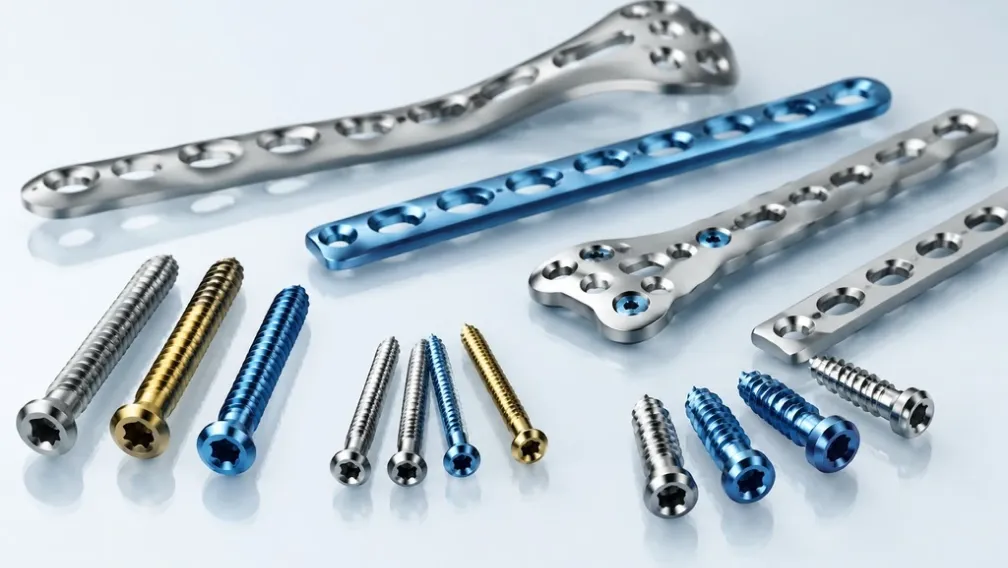
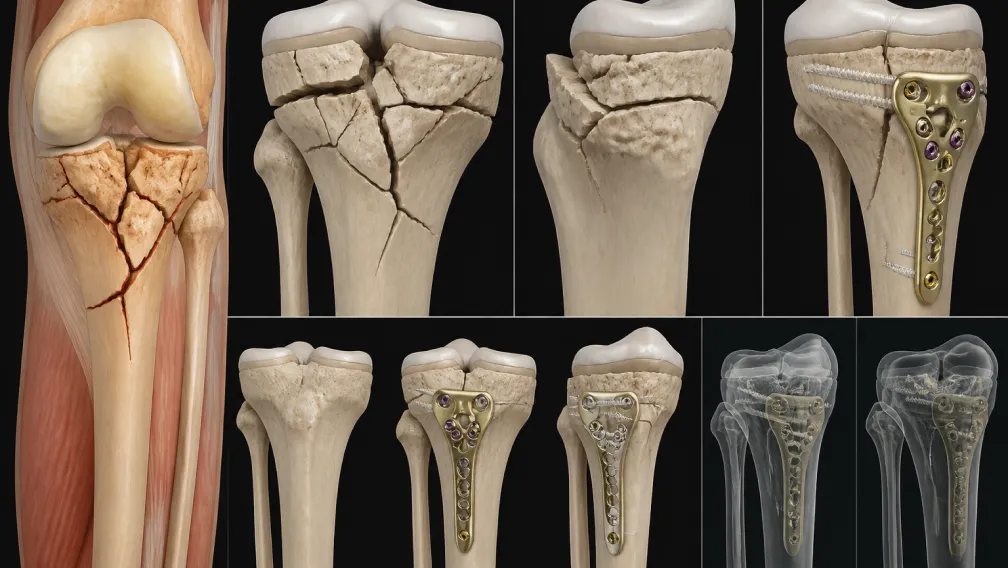
Clinical failure in orthopedic trauma osteosynthesis rarely begins with the catastrophic fracture of a titanium or stainless steel bone plate. Instead, constructive failure almost invariably initiates at the screw-bone or screw-plate interface. Screw loosening, thread strip-out from osteoporotic cortices, fatigue shearing across the fracture gap, and head cross-threading during plate engagement represent the primary modes of fixation loss. Understanding the mechanical performance of an internal fixation construct requires rigorous examination of screw geometry. Every dimensional parameter—outer thread diameter, core diameter, pitch, lead, flute profile, and metallurgical composition—directly dictates load transfer, bending stiffness, pull-out resistance, and cyclic fatigue endurance. This technical analysis deconstructs the physical principles governing orthopedic bone screws, detailing how thread geometry and manufacturing tolerances prevent hardware failure in complex fracture management.
Core Geometrical Parameters and Physical Load Models
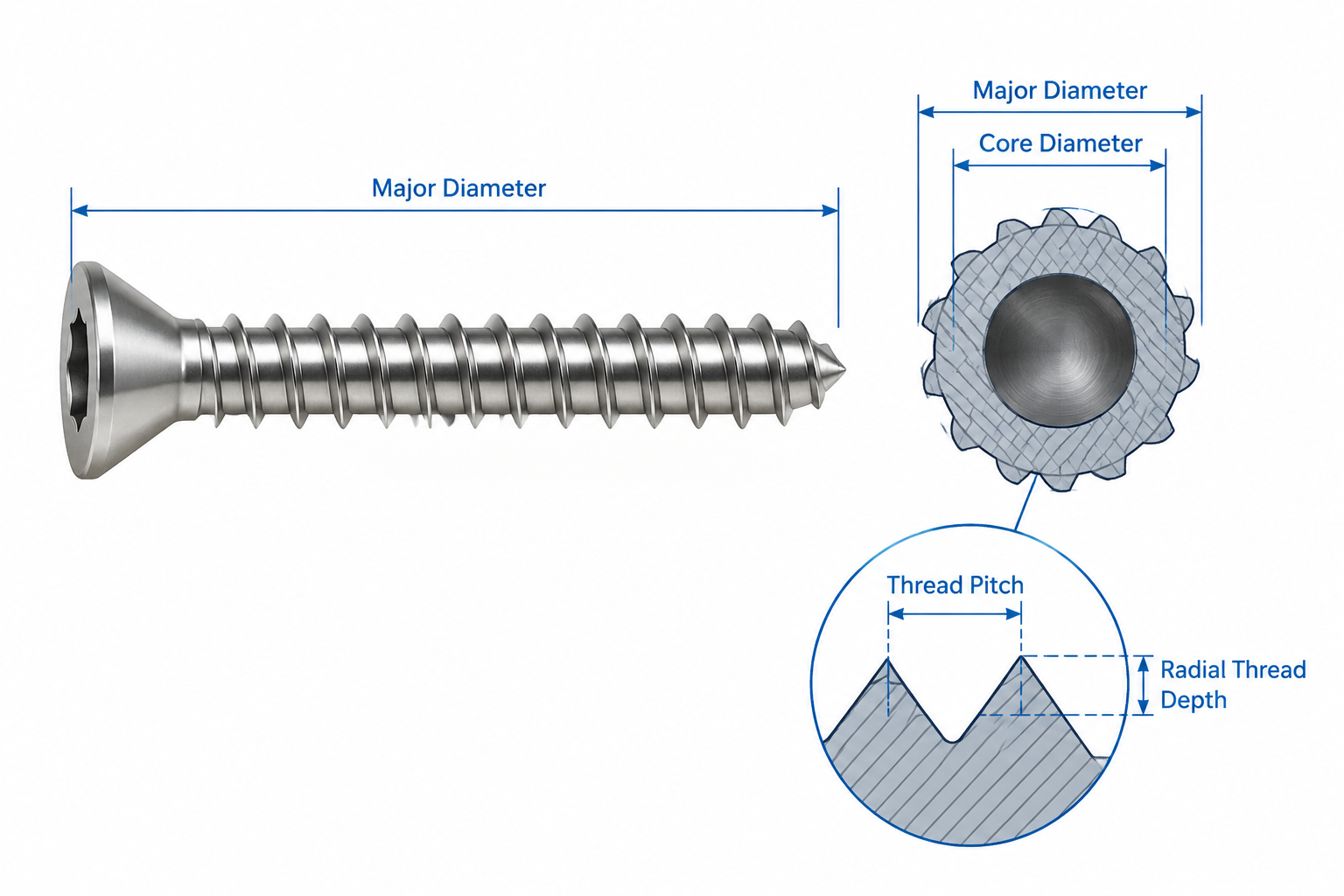
An orthopedic bone screw functions as a mechanical machine designed to convert rotational torque into linear translation and compressive axial pre-load. Under ASTM F543 standards, standard bone screws are defined by distinct dimensional variables that govern their structural response to axial tension, bending moments, and transverse shear forces.
The major diameter (outer thread diameter) defines the outer boundary of the thread helix. In standard cortical bone applications, major diameter dictates the surface area of bone engaged by the implant. The volumetric shear area of the bone matrix captured between adjacent thread flights is proportional to thread depth—the radial distance between major and minor diameters. Pull-out strength (Fpull-out) correlates directly with this projected shear area:
Fpull-out = π × dmajor × Leng × τbone × fshear
where dmajor is the outer diameter, Leng represents the total thread engagement length across the cortices, τbone is the shear strength of the host bone, and fshear represents the thread shape factor. In dense diaphyseal bone, conventional cortical bone screws exploit this relationship to compress plate surfaces against periosteum.
Conversely, the core diameter (minor diameter) represents the central solid cylinder of the screw shaft below the root of the thread. In structural beam mechanics, the core diameter governs torsional rigidity, ultimate shear failure limits, and bending stiffness. The area moment of inertia (I) of a solid circular cross-section is defined by:
I = (π × dcore4) / 64
Because resistance to bending deflection and shear failure scales to the fourth power of the core radius, even marginal increases in core diameter produce massive gains in mechanical strength. Increasing a screw core diameter from 2.5mm to 3.0mm results in a 107% increase in the area moment of inertia, effectively doubling its fatigue limit under cyclic cantilever loads.
Thread Pitch and Shallow Profile Engineering in Locked Plating
Thread pitch represents the linear distance between adjacent thread crests measured parallel to the longitudinal axis. In conventional non-locked dynamic compression systems, fine thread pitch (typically 1.0mm to 1.25mm) provides numerous points of purchase in dense cortical bone, maximizing frictional torque resistance during manual tightening. However, the introduction of fixed-angle locked plating fundamentally altered the operational demands placed on screw shafts.
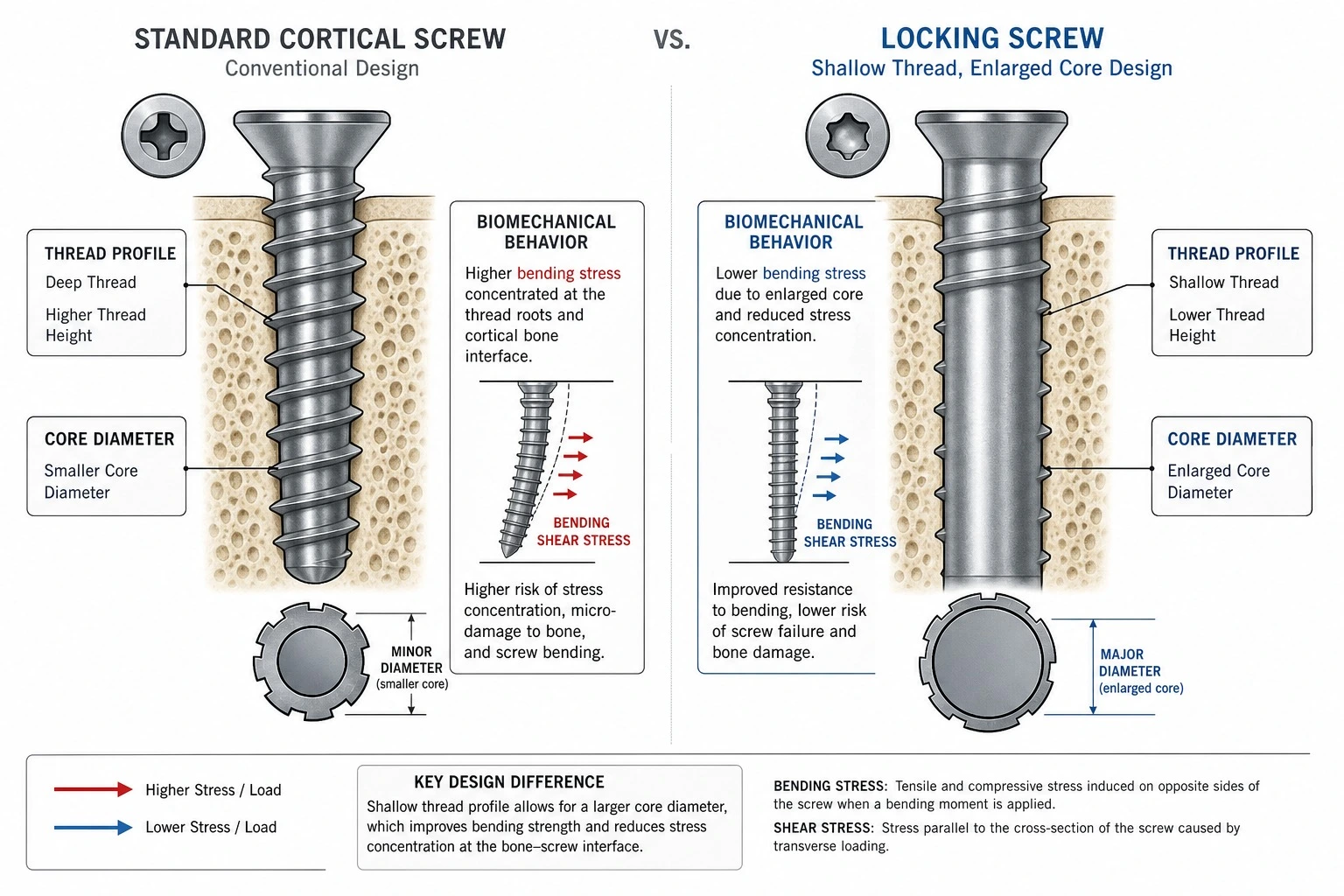
In conventional compression plating, the plate must be clamped forcefully against the bone to generate frictional stability. This frictional interface requires substantial thread depth to prevent stripping during final torque application. In contrast, an orthopedic locking plate operates as an extramedullary internal fixator. Because the screw head threads directly into the plate hole, creating a rigid structural junction, the construct does not rely on compressive friction between plate and bone to maintain reduction.
Relieved of the requirement to generate massive interfragmentary compression, locking screws utilize a shallow thread profile. By reducing the radial height of the thread crests, implant engineers expand the core diameter within the same outer dimensional envelope. For example, while a conventional 3.5mm cortex screw features a core diameter of approximately 2.4mm, a 3.5mm locking screw typically expands to a core diameter of 2.9mm to 3.0mm. This substantial expansion reinforces the screw against transverse shear stresses across the fracture gap without increasing the surgical footprint or drill hole diameter.
Double-Lead Thread Dynamics: Synchronized Head-to-Shaft Advance
The mechanical coupling between the screw head and the threaded plate hole represents the most critical engineering interface in modern fracture fixation. Conventional single-lead threads create significant manufacturing and intraoperative challenges when applied simultaneously to both the screw head and the screw shaft.
Lead defines the linear distance a screw advances axially with a single 360-degree rotation. In a single-lead thread, lead equals pitch. If a locking screw possessed an identical single-lead thread on both its head and its shaft, the head would engage the plate hole at the same rate the shaft entered the bone. However, plate holes possess thin structural walls (often 1.5mm to 3.0mm thick). Single-lead threads in thin plate sections provide insufficient thread engagement, risking cross-threading, mechanical binding, and premature cold-welding under surgical torque.
To overcome this limitation, premium locking systems utilize double-lead thread geometry machined into the screw head. A double-lead thread incorporates two distinct, interleaved helical ridges running parallel around the head circumference. The pitch of the screw head is engineered to be precisely twice that of the screw shaft:
Leadhead = 2 × Pitchhead = Leadshaft
Because the screw head features two thread starts, the linear advance rate of the screw head into the plate hole perfectly matches the linear advance rate of the shaft into the bone matrix. As the surgeon rotates the drive tool, the head engages the female plate threads smoothly without generating axial pre-tension or distracting fracture fragments. This precise kinematic synchronization eliminates cross-threading and prevents axial pre-stresses within the plate beam, preserving the calibrated fatigue life of the fixation frame.
Cutting Flute Dynamics and Thermal Osteonecrosis Prevention
Modern trauma fixation relies extensively on self-tapping screw geometries to eliminate manual tap passes, reduce operative duration, and preserve bone bed architecture. However, self-tapping mechanics introduce complex cutting dynamics and frictional thermal considerations.
A self-tapping screw features distal cutting flutes ground through the initial threads. The rake angle of the cutting edge and the volumetric relief cavity of the flute dictate how efficiently bone fragments are cut and evacuated. If flute volume is insufficient, compacted cortical chips accumulate within the relief trough, causing rapid torque spikes, screw binding, and micro-fractures in the surrounding osteon matrix. Optimized flutes feature parabolic or helical geometries that direct bone debris upward and away from the advancement path.
Furthermore, cutting friction generates local heat. Research in bone thermal biology demonstrates that cortical temperatures exceeding 47°C for longer than one minute induce irreversible thermal osteonecrosis, resulting in osteocyte apoptosis, local bone resorption, and subsequent hardware loosening. High-grade bone screws utilize polished cutting faces, razor-honed lead threads, and optimized clearance angles that lower insertion torque thresholds by up to 35%, ensuring bone bed viability throughout insertion.
Comparative Mechanical Specifications Across Screw Architectures
Orthopedic trauma formularies utilize specialized screw configurations tailored to specific bone qualities and mechanical roles. The physical distinctions between major screw classes are summarized below:
| Screw Classification | Typical Outer/Core Diameter Ratio | Thread Pitch & Depth Profile | Primary Mechanical Role | Dominant Failure Mode |
|---|---|---|---|---|
| Cortical Bone Screw | Moderate (~1.45 : 1.0) | Fine pitch (1.0–1.25mm); deep symmetrical thread | Interfragmentary compression; plate-to-bone clamping | Thread stripping; pull-out under bending toggle |
| Cancellous Bone Screw | High (~2.10 : 1.0) | Coarse pitch (1.75–2.75mm); deep asymmetrical thread | Fragment lag compression in spongy metaphyseal bone | Cancellous shear failure; core shearing under torque |
| Locking Cortical Screw | Low (~1.20 : 1.0) | Medium pitch (1.25–1.5mm); shallow thread profile | Fixed-angle cantilever beam load transfer; bridging | Construct pull-out as a single block; fatigue fracture |
| Cannulated Screw | Variable (Hollow Core) | Partially or fully threaded; reverse-cutting flutes | Percutaneous guide-wire guided lag fixation | Shaft bending and fatigue shearing across lumen |
Subchondral Rafting: Smooth Locking Pegs versus Threaded Locking Screws
In articular and periarticular reconstruction, stabilizing thin subchondral bone beneath joint surfaces presents distinct mechanical challenges. Highly fragmented or osteoporotic joint surfaces, such as those in distal radius and tibial plateau fractures, are susceptible to collapse under axial joint reactive loads. Surgeons face a deliberate choice between threaded locking screws and smooth locking pegs.
Threaded locking screws engage cancellous bone along their full working length. While this provides axial hold, driving threaded screws within millimeters of articular cartilage carries inherent risks. If screw threads bridge fragile subchondral fragments, rotational torque during insertion can twist, split, or displace delicate joint surfaces. Furthermore, during elective hardware extraction, bone ingrowth into the thread flutes significantly increases removal torque, frequently stripping drive recesses or fracturing bone fragments.
Smooth locking pegs address these limitations by pairing a threaded fixed-angle locking head with a completely unthreaded, smooth cylindrical shaft. The unthreaded shaft acts as a rigid, blunted subchondral beam. When aligned in parallel arrays, smooth pegs form a dense structural shelf that resists joint depression without exerting rotational shear on articular cartilage. Moreover, smooth pegs eliminate fibrous and osseous tissue binding, ensuring rapid, atraumatic removal if hardware revision becomes necessary.
Metallurgical Engineering: Titanium versus 22-13-5 Stainless Steel
Material properties dictate how bone screws accommodate cyclic loading, bending deflection, and biological integration. The two premier materials in trauma manufacturing—Ti-6Al-4V ELI (Grade 5 Titanium, ASTM F136) and forged 22-13-5 Nitrogen-Strengthened Stainless Steel (ASTM F1314)—exhibit divergent mechanical profiles.
Titanium alloy (Ti-6Al-4V) features an elastic modulus of approximately 110 GPa, roughly half that of conventional 316L stainless steel (200 GPa). This lower modulus closely approximates the stiffness of cortical bone (15–20 GPa), significantly mitigating stress-shielding phenomena and facilitating secondary bone healing via micro-motion callus formation. Additionally, titanium's titanium dioxide passivated layer provides exceptional biocompatibility, minimizing inflammatory soft tissue reactions. In specialized extremity fixation, a titanium bone screw is widely selected for low-profile anatomical plates.
Conversely, forged 22-13-5 stainless steel is an austenitic alloy enriched with nitrogen, manganese, chromium, and molybdenum. Cold-worked 22-13-5 provides extraordinary mechanical yield strength exceeding 750 MPa, alongside a high fatigue limit and resistance to cyclic shear deflection. When applied across high-load bridge plating constructs in the femur and tibia, 22-13-5 screws resist plastic deformation and cut-out far more effectively than standard 316L steel. Selecting between these alloys depends on the clinical objective: titanium optimizes biological compliance and tissue tolerance, while 22-13-5 stainless steel maximizes ultimate load-bearing rigidity across expansive comminuted zones.
Surgical Technique and Torque Limiting Discipline
Achieving predictable mechanical outcomes with bone screw hardware requires strict surgical adherence to torque mechanics. In conventional plating, screw tightening is guided by tactile cortical resistance. The surgeon feels the screw bite into bone, drawing the plate down. If the surgeon over-torques, the bone threads shear, stripping the hole and destroying hold.
In locked plating systems, tactile feedback is completely decoupled from bone resistance. The screw head threads into the plate hole; thus, tightening resistance reflects metal-on-metal interface engagement rather than bone density. Manual tightening without calibrated guidance risks cold-welding, stripping internal plate threads, or fracturing the screw neck. Operating protocols mandate the use of calibrated torque-limiting screwdrivers (typically calibrated to 0.8 Nm for 2.4mm/2.7mm screws, 1.5 Nm for 3.5mm screws, and 4.0 Nm for 4.5mm/5.5mm screws). Dedicated threaded drill guides must be locked perpendicularly into the plate hole before drilling, as off-axis drilling inevitably induces cross-threading and catastrophic loss of fixed-angle stability.
Procurement, Packaging, and Supply Chain Defense
For hospital materials managers, central sterile supply departments (CSSDs), and medical device distributors, managing bone screw inventory represents a major logistical undertaking. Trauma surgery demands instant intraoperative availability across comprehensive length matrices—often spanning 10mm to 100mm in 2mm increments across multiple diameter families.
Stockouts of specific screw lengths force surgical compromises, such as placing over-length screws that irritate soft tissue or under-length screws that lack bicortical purchase. With global contract manufacturers experiencing extended production queues and lead times stretching to 16 weeks, healthcare systems face continuous replenishment delays. BoneCraft shields surgical facilities from upstream allocation constraints by maintaining massive wholesale warehouse inventory covering more than 2,800 SKUs. Every factory-sealed screw and anatomical plate is supplied with original manufacturer documentation, full lot traceability, and compliance certifications, ensuring emergency trauma suites maintain immediate operational readiness. Learn more about structural hardware specifications in our detailed guide on types of orthopedic plates and screws.
Frequently Asked Questions
Why do locking screws feature a shallower thread profile than conventional cortical screws?
Conventional cortical screws rely on deep threads to grip bone cortices and generate compressive friction between the plate and bone. Locking screws do not compress bone to plate; their threaded heads lock rigidly into plate holes to create a fixed-angle internal fixator. Relieved of compressive clamping requirements, locking screws utilize a shallower thread profile, allowing engineers to maximize the solid core diameter of the screw shaft. This dramatically increases the screw's area moment of inertia, enhancing its resistance to bending moments and cyclic shear fatigue.
How does a double-lead thread eliminate cross-threading and internal plate pre-stress?
A double-lead thread incorporates two parallel helical thread starts with a pitch exactly twice that of the screw shaft. This synchronization ensures that the linear advance rate of the screw head into the plate hole perfectly matches the linear advance rate of the shaft into the bone matrix. As the surgeon rotates the screw, the head glides smoothly into the plate threads without binding, stripping delicate bone threads, or inducing unintended axial pre-stresses within the plate beam.
What mechanical factors cause bone screws to fracture at the neck-shaft junction?
The junction between the screw head and the unthreaded shaft experiences the highest concentration of bending and shear moments, particularly in bridge plating constructs spanning comminuted fracture gaps. If screws are inserted off-axis, over-torqued beyond calibrated limits, or subjected to cyclic physiological weight-bearing before adequate bridging callus forms, mechanical fatigue induces brittle shear fracture across this transition zone.
Can titanium bone screws be combined with stainless steel plates in clinical fixation?
No. Combining dissimilar metals—such as titanium alloy screws with stainless steel plates—induces galvanic corrosion. In the presence of conductive bodily fluids and physiological saline, the electrochemical potential difference between the alloys accelerates corrosion at the screw-plate interface. This leads to metal ion release, local tissue inflammation, peri-implant osteolysis, and premature construct failure. Clinical formularies strictly mandate material uniformity.
What is the functional difference between screw pitch and screw lead in multi-lead screws?
Pitch represents the linear distance between adjacent thread crests measured parallel to the screw axis. Lead represents the linear distance the screw advances axially with one full 360-degree rotation. In single-lead screws, pitch and lead are identical. In double-lead screws, lead is precisely twice the pitch. This geometry enables rapid linear advancement into thin plate sections while maintaining deep thread engagement.
Why are smooth locking pegs preferred over fully threaded screws for subchondral articular support?
Smooth locking pegs provide rigid, fixed-angle subchondral beam support beneath fragile articular surfaces without cutting into delicate osteopenic fragments during insertion. Because the peg shaft is completely smooth, bone and fibrous tissue cannot integrate into thread flutes. This dramatically reduces extraction torque, prevents stripped screw heads, and protects joint surfaces from traumatic bone tearing during subsequent hardware removal.
-

BoneCraft Medical & Technical Editorial Team
Orthopedic Fixation Specialists
The BoneCraft Editorial Team comprises biomedical specialists and medical device supply chain experts. Dedicated to surgical transparency and technical precision, we publish insights on trauma plating, intramedullary fixation, and biomechanical implant performance. Our content synthesizes established surgical techniques, clinical literature, and exact specifications for genuine Zimmer Biomet orthopedic products to support global healthcare distributors and procurement teams.